Livestock Wintering: Locating and Managing your Site to Make it Sustainable
A sustainable wintering system provides livestock with essential needs—food, water, and shelter—while balancing production efficiency, farm profitability, and environmental stewardship. It includes:
- Integrated Management: Combines feeding, infrastructure, and resource strategies to create flexibility and maximize profits.
- Environmental Responsibility: Minimizes negative impacts on land and water resources, addressing concerns of neighboring communities and consumers.
- Public Scrutiny: Livestock practices affect not only farms but also the broader public, making sustainability a shared responsibility.
Production Benefits of a Sustainable System
· Lower expenses for spreading and distributing manure across the farm.
· Livestock thrive in a natural, low-stress environment, resulting in:
o Fewer health problems and better overall performance
· Utilize on-pasture feed sources such as:
o Stockpiled forages, Cereal and corn swaths and/or bale grazing
→ Reduces hauling and handling costs
→ Reduces hauling and handling costs
· Manure acts as “farmer’s gold”, enriching soil fertility.
· Applying manure at appropriate rates on marginal or unproductive land can make it productive.
Environmental Risks of Livestock Concentration
Manure and Nutrient Accumulation:
- Extended confinement or feeding in concentrated areas leads to localized manure buildup and excess nutrients which can run off into surface waters, carrying nutrients and microorganisms.
Groundwater Vulnerability:
- High risk when manure accumulates on shallow soils over bedrock or coarse sand/gravel near the surface.
- Nutrients and pathogens can leach into groundwater systems.
Pathogen Concerns:
- Manure may contain harmful bacteria and parasites:
- E. coli (including O157:H7): Causes severe illness in humans (diarrhea, fever, kidney failure, sometimes death).
- Cryptosporidium and Giardia: Cause gastrointestinal sickness, diarrhea, and weight loss in humans and animals.
Wildlife and Habitat Impact:
- High livestock densities can damage wildlife habitat, trample shorelines, and degrade waterways through runoff.
Choosing a Sustainable Wintering Site
The ideal wintering site should be:
- Feasible for your operation
- Healthy and comfortable for livestock
- Safe for the environment
Factors to Consider
- Land Characteristics: Contours, soil type, water resources
- Herd or Flock Requirements: Size and nutritional needs
- Existing Infrastructure: Combine current facilities with new options such as:
- Portable wind fences
- Temporary fencing for paddocks and feeding
- Alternative watering stations
Goals of Sustainable Site Selection
- Protect Sensitive Areas:
Avoid or restrict livestock access to: - Slopes
- Sandy soils
- Non-vegetated areas
- Riparian zones
- Woodlots
- Land already nutrient-rich from manure
- Maximize Land Use:
Utilize a greater portion of your land base and in-field feed sources for an extended period throughout the year.
Site Selection Recommendations
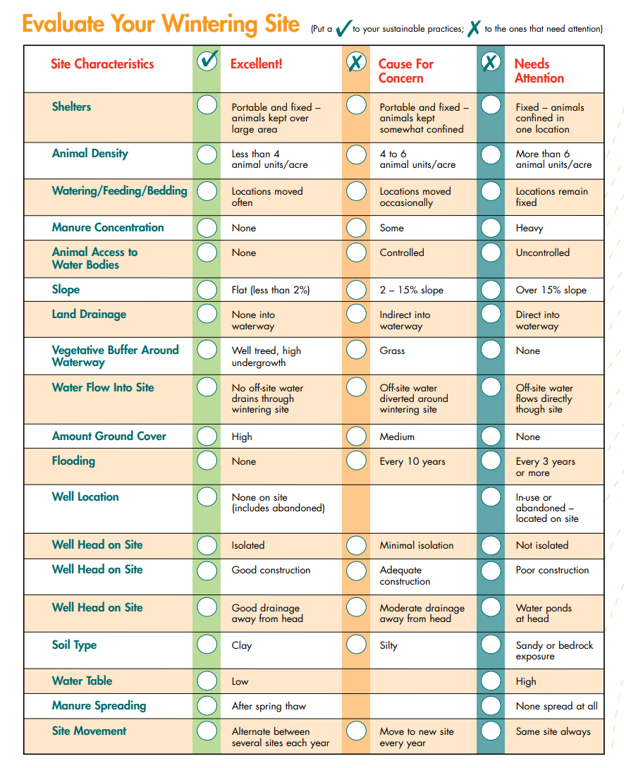
1. Water Management
- Locate watering stations away from natural water sources to prevent contamination.
- Use deeply buried pipelines to central pasture locations.
- Consider solar or wind-powered pumps for reliable water supply in remote areas.
2. Ground Cover
- Choose sites with good vegetation or crop residue to filter nutrients and sediment from runoff.
3. Slope Considerations
- Select areas with less than 2% slope to minimize runoff and erosion.
- If slope is unavoidable:
- Place bedding and feeding sites away from waterways.
- Use naturally elevated ground for high-traffic areas to control drainage.
4. Soil Type
- Clay soils reduce leaching risk.
- Avoid sandy soils, gravel, shale, or sandstone outcrops—they increase leaching and require extra management.
5. Water Table & Flood Risk
- Avoid areas with high water tables or spring flooding history to prevent nutrient and bacteria migration into groundwater or surface water.
Strategies for Maintaining a Sustainable Wintering Site
1. Utilize More of Your Farm
- Expand wintering areas to reduce manure accumulation and improve nutrient distribution.
- Healthy vegetation growth the following summer indicates proper manure management; poor regrowth suggests animal density is too high.
2. Manage Manure
- Remove and spread manure from bedding, watering, feeding sites, and high-traffic areas.
- Follow your farm’s nutrient budget:
- Calculate manure application based on crop needs.
- Use soil tests and provincial guidelines (e.g., Tri-Provincial Manure Application and Use Guidelines).
3. Keep Animals Moving
- Move livestock every few days if possible; at minimum, relocate once or twice per winter.
- Rotate wintering sites annually to prevent overuse.
4. Use Portable Infrastructure
- Wind fences and portable fencing allow temporary sites and flexible movement.
- If sites cannot be moved, relocate bedding and feeding areas frequently to spread manure.
5. Adjust Feeding Approach
- Consider extended grazing programs that take animals to the feed.
6. Establish Satellite Feed Storage
- Store feed in multiple locations across the farm to enable feeding in different areas and reduce pressure on central sites.
7. Stream Crossings and Alleyways
- Use gravel stream crossings with control gates to reduce erosion and protect waterways.
- Avoid placing alleyways on land prone to run-off or seepage.
- Limit alley way use to prevent soil copmpaction and nutrient buildup.
8. Bedding Management
- Apply ample bedding litter to absorb nutrients and reduce leaching and run-off.
9. Vegetative Cover
- Increase vegetation wherever possible to act as a natural filter for run-off and sediment.
- Seed crops in these areas to utilize nutrients and provide high-quality feed.
10. Buffer Zones
- Establish permanent vegetation buffers around sensitive areas such as water bodies to protect water quality.
11. Wellhead Protection
- Maintain a minimum 30-foot buffer between livestock and wellheads.
- Ensure proper drainage away from wells and secure cribbing and lids.
12. Water Flow Diversion
- Divert off-site water flow around bedding and feeding areas to:
- Reduce run-off and mud
- Improve animal health (prevent scours in newborns)
- Lower bedding replacement costs
13. Control Water Flow
- Use landscaping with ditches and channels to direct water leaving the site toward less-sensitive areas.
14. Manure Management
- Remove and spread manure early in spring to prevent runoff or seepage.
- Avoid spreading on:
- Erosion-prone land
- Areas draining directly into waterways
- Land adjacent to permanent water bodies or major field drains
15. Fencing for Control
- Install portable or permanent fencing to:
- Manage feeding and animal distribution and control density and rotation
- Protect sensitive areas
- Improve manure distribution
16. Watering Innovations
- Explore modern watering systems for portability and efficiency.
17. Wildlife Habitat Considerations
- Plan to maintain and protect wildlife habitat while managing livestock operations