
Lactation Rations for Beef Cows
Adequate nutrition after calving is essential to ensure timely rebreeding and long‑term herd productivity.
· After calving, nutrient requirements increase by ~25% compared to late pregnancy.
· Milk production peaks at 8 weeks, and feed intake increases until about 12 weeks postpartum.
· Requirements for energy, protein, calcium, and vitamin A rise sharply compared to the last trimester.
· If a cow’s diet doesn’t meet these needs, she will lose body condition as she prioritizes milk production.
· This period of high nutrient demand overlaps with the start of breeding season.
· Cows in poor condition after calving will:
- Return to estrus later, have lower conception rates and risk prolonging the calving season or failing to rebreed.
There are many different feeds available for cattle rations and factors to consider when selecting feeds for lactation rations. Using the Cowbytes nutritional program as a guide is a great place to start planning a suitable nutrition program to meet the needs of your herd at their highest peak of nutrition. Below are some general examples for lactating cows.
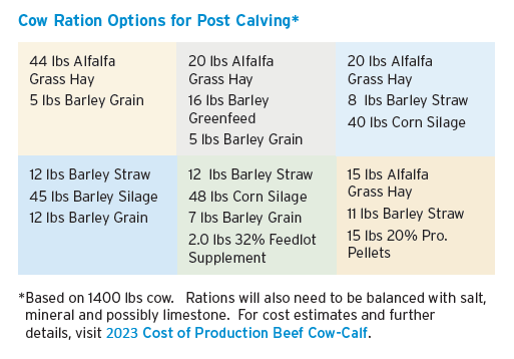
Considerations:
Energy Requirements
· Late pregnancy: ~56% TDN diet vs. 2 months post-calving: ~63% TDN diet.
· Increased intake and higher energy density are essential. Most forages require energy supplementation (e.g., cereal grains) to meet these needs.
Protein Requirements
· Post-calving diets should contain 10–11% crude protein.
· Good-quality hay, legume silages, and some cereal silages can meet this need.
· Protein supplements are necessary when feeding corn silage or low-quality forages, such as DDG’s or Canola meal.
Minerals and Vitamins
· Lactation increases demand for calcium, phosphorus, magnesium, and trace minerals (copper, manganese, zinc, selenium). Failure to supplement can result in milk fever, winter tetany and reduce post calving conception
· Imbalances (e.g., excess sulfur or molybdenum) can induce deficiencies.
· Vitamin A requirements rise by ~40%; supplementation is cost-effective.
Feed tests are essential to ensure the feed is providing what is required by the lactating animal.
Hay and silage quality is affected by crop or forage type, maturity at harvest, insect damage, plant diseases and environmental factors. Soil fertility and available moisture are also important. One factor that greatly influences quality is plant maturity, especially when the crop is cut past the flowering stage. Higher fibre content reduces energy density, forage digestibility and voluntary feed intake.
Grains are a good source of energy, or total digestible nutrients (TDN), and are usually required in lactating rations. Cereal grains range from 73 to 88 per cent TDN, with oats having the lowest energy density, with corn, rye, triticale and wheat having the highest. Grain is not typically used for supplementing protein deficiencies.
Straw, forage seed aftermath, and corn residue generally do not have enough energy or protein to be included in a lactation ration. On a dry matter basis, these feeds contain approximately 4.5 per cent protein and 45 per cent TDN. Neutral detergent fibre content often is above 60 per cent. These lower-quality feeds take longer to digest which limits the intake of other higher-quality ingredients.
Key Takeaways:
· After calving, beef cows face increased nutritional demands for lactation and recovery. Meeting these requirements while maintaining rumen health is essential for productivity and timely rebreeding.
· Balance energy and protein while considering grain type for energy deficiencies
· Maintain/Increase mineral and vitamin supplementation to support lactation and reproduction.
· Additional supplementation may be required when wind and colder conditions prevail.