If you think a child is being harmed or neglected,
contact CFS at 1-866-345-9241.
Note: If this is an emergency, contact your local police emergency number.

Tracia’s Trust: Manitoba’s Sexual Exploitation Strategy
The sexual exploitation and sex trafficking of children, youth and adults is a serious concern in Manitoba, Canada, and around the globe. Children and youth who have been sexually exploited are victims of child sexual abuse.
The Manitoba Strategy Responding to Children and Youth at Risk of, or Survivors of, Sexual Exploitation was launched in December 2002 as directed by the Manitoba Government’s Healthy Child Committee of Cabinet. The Department of Familes is responsible for coordinating the implementation of the Manitoba Strategy, with other partner departments and agencies leading specific responses within the Strategy. The Strategy includes initiatives in the areas of prevention, intervention, legislation, coordination, research and evaluation.
The Manitoba Strategy Responding to Children and Youth at Risk of, or Survivors of, Sexual Exploitation was launched in December 2002 as directed by the Manitoba Government’s Healthy Child Committee of Cabinet. The Department of Familes is responsible for coordinating the implementation of the Manitoba Strategy, with other partner departments and agencies leading specific responses within the Strategy. The Strategy includes initiatives in the areas of prevention, intervention, legislation, coordination, research and evaluation.
For the purposes of the Manitoba Strategy, child sexual exploitation is: the act of coercing, luring or engaging a child, under the age of 18, into a sexual act, and involvement in the sex trade or pornography, with or without the child’s consent, in exchange for money, drugs, shelter, food, protection or other necessities. This is a broader definition than that used in The Child Sexual Exploitation and Human Trafficking Act.
If you know of a child who is being sexually exploited and is in need of protection call a child and family services (CFS) agency.
If someone is in immediate danger, call your local emergency police number.
Collaborative Best Practices to End Sexual Exploitation and Sex Trafficking in Manitoba
In 2016, the Sexual Exploitation unit began research on “Collaborative Best Practices to End Sexual Exploitation and Sex Trafficking in Manitoba”
This report helps Manitobans better understand the complexity of sexual exploitation and how it affects our youth, improving our collective responsibility and action.
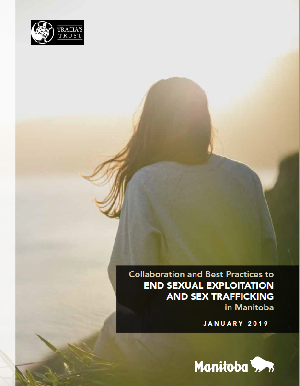
Read the report (3MB)
This publications is available in alternate formats upon request.