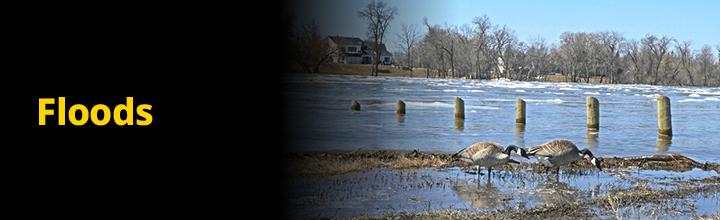
Floods
Understanding a flood
In Manitoba, flooding is a common natural hazard that can cause significant property damage. Manitobans have faced major floods for centuries, most notably in 1950, 1997, 2009 and 2011 along the Red River and Assiniboine River basins. Floods can occur at any time of the year. They are most often caused by heavy rainfall, rapid melting of a thick snowpack, ice jams, and natural or man-made dam failures.
Flood damage is more likely in low-lying areas along rivers or in ravines, also known as flood plains. However, flooding can occur anywhere.
Risk awareness:
- Maintain awareness by monitoring information shared by your local authority.
- Be aware of your area’s flood risk and history.
- Monitor Manitoba River Conditions and Forecasts and Manitoba Flood Information regularly.
Planning and education:
- Consider adding the following items to your Emergency Go Kits and/or Home Emergency Supplies: waterproof containers to protect documents or electronics in your kit, rubber boots for navigating through water, life jackets, and a battery-operated or manual sump pump.
- Develop and practice your family emergency plan.
- Make sure you know your local authority’s evacuation routes and procedures.
- Have a plan for evacuating pets and livestock.
Property protection strategies:
- Make sure your home is protected by flood insurance (usually not included in standard home insurance).
- Install flood barriers or sandbags if you live in a high-risk area.
- Move furniture, electrical appliances, and other important belongings to floors above ground level.
- Use weather protection sealant around basement windows and the base of ground-level doors.
- Make sure your basement has reliable drainage or a working sump pump.
Review the Natural Disaster Preparation Residential Checklist for more tips on how to protect your home.
The Historic Red River Flood (1997)
The Flood of 1997 is one of the most significant floods in Canadian history. It was caused by rapid snowmelt and heavy rainfall, which caused the Red River in Manitoba to rise to record levels. The flood posed a threat to the City of Winnipeg, leading to mass evacuations, significant sandbagging efforts to protect communities, and the later expansion of the Red River Floodway.
When a flood is expected, quick and coordinated action is essential to ensure safety. This guide offers clear and concise steps, from staying up to date with weather updates, to securing homes, to helping individuals effectively respond to challenges.
Stay informed:
- Listen to local radio, television, or other official news sources.
- Pay close attention to updates and warnings from officials.
Be ready to evacuate:
- Be prepared to evacuate at any time. Have your Emergency Go Kits on hand.
- Review your emergency plan with your family.
- Ensure the safety of your pets and any livestock.
Health and Safety:
- Disconnect all electrical appliances.
- Do not touch any wet or submerged electrical equipment.
- Follow specific instructions from local emergency officials.
- Remove toxic substances from the flood area to prevent pollution, such as pesticides and insecticides.
- Avoid driving through floodwaters or underpasses. They may be deeper than they appear.
- Avoid confining farm animals in barns to prevent drowning.
Manitoba Flood of 1950
In 1950, Manitoba experienced a significant flood event along the Assiniboine River. Heavy rainfall and snowmelt contributed to rising water levels. The flood caused the evacuation of thousands of people. Communities along the river suffered significant damage. The event led to the establishment of flood control and reservoir systems in the region.
Before You Start Cleaning Up
- Contact your insurance company or broker and ask your insurance provider which expenses may be covered and for how long.
- Report the damage as soon as possible.
- Make a list of damaged or destroyed items.
- Take photos and videos of all damage before cleaning up.
- Keep receipts for cleanup costs, temporary housing, food, and other disaster-related expenses.
- Ask your insurance provider which expenses may be covered and for how long.
Important: Consider creating a cleanup plan. A simple checklist can help you stay organized and track repairs, cleanup activities, and damaged items. Take photos throughout the cleanup process to support insurance claims.
Stay Safe When Returning Home
Important: Do not return home until local authorities say it is safe to do so. Work with local authorities and professionals to evaluate the safety of your home.
Before entering your home:
- Ensure that electricity to the property is turned off (normally located in the property electrical panel, circuit breaker box, or fuse box).
- Have damaged electrical and gas systems inspected by a licensed professional before turning them on, such as contacting Manitoba Hydro.
- Use caution when entering areas that were flooded (such as basements). Watch for debris, and other hazards.
- If you are a private well owner and suspect floodwater may have entered your well, have your water tested before using it for drinking, cooking, brushing teeth, or preparing food.
Cleaning Up After Flooding or a Sewage Backup
Understanding the Difference
Floodwater may contain dirt, debris, chemicals, and other contaminants.
Sewage backups contain human waste and harmful bacteria, viruses, and other microorganisms. Extra precautions should be taken when cleaning areas affected by sewage.
Managing Mould and Health Risks
Flooding and sewage backups can create conditions that allow mould to grow quickly. Mould may be visible on walls, drywall, furniture, clothing, carpets, rugs, cardboard boxes, and books. However, it can also grow in hidden areas, such as behind walls, under carpets, and inside furniture or cushions. Mould can damage your home and may cause health problems, especially for children, older adults, pregnant individuals, and people with asthma, allergies, or other respiratory conditions.
To help prevent mould growth and manage health risks:
- Dry your home and belongings as quickly as possible after flooding or a sewage backup. It's less likely to grow if your home and furnishings are dry within 48 hours after a flood.
- Items that cannot be thoroughly cleaned and dried should be removed and disposed of to prevent further damage and mould growth.
- If you are unsure how to safely clean, dry, or assess the damage, consider contacting a qualified restoration professional.
- Keep children, pets, and anyone with underlying health concerns away from affected areas until cleanup is complete.
Cleaning Tips
- Keep children, pets, and vulnerable individuals away from affected areas.
- Open doors and windows to improve airflow.
- Do not use fans if mould is present, as fans can spread mould spores to other areas.
- Wear waterproof gloves, rubber boots, eye protection, and an N95 respirator (or higher protection).
- Avoid direct contact with sewage-contaminated water and materials.
- Wash your hands thoroughly after cleanup activities.
Cleaning Supplies You May Need:
- Bucket
- Stiff-bristle brush
- Cleaning cloths
- Safety goggles
- Rubber gloves
- Waterproof boots
- N95 respirator (or higher protection)
- Dish detergent
- Household bleach
- Garbage bags
- Other cleaning products as needed
Cleaning Solutions
- Bleach Solution: Mix 1 part bleach with 10 parts clean water.
- Baking Soda Solution: Mix ¼ tablespoon baking soda with warm water in a spray bottle.
- Soap Solution: Mix unscented detergent with warm water.
Important: Painting, caulking, or sealing over mould will not stop it from growing. Mould-contaminated materials, such as drywall, may need to be removed and replaced.
Items That Should Be Discarded
Some materials cannot be safely cleaned after flooding. Throw away items that remain wet for more than 48 hours, including:
- Wet insulation
- Flood-damaged drywall (remove at least 30 cm or 12 inches above the water line)
- Carpets and underlay
- Particleboard furniture
- Mattresses and box springs
- Stuffed toys
- Books, paper, and cardboard products
- Pillows and cushions
- Upholstered furniture and furniture coverings
- Perishable food
- Food or medicine that came into contact with floodwater
Important: Items contaminated by sewage should generally be discarded because they cannot be properly cleaned and disinfected.
Disposal Tips
- Place mouldy or sewage-contaminated materials in sealed plastic bags before disposal.
- Wash your hands thoroughly after cleanup.
- Change and wash clothing worn during cleanup.
When to Get Professional Help
Consider contacting a qualified restoration professional if:
- Mould or sewage contamination covers a large area.
- You suspect mould is hidden behind walls, flooring, or cabinets.
- Sewage water has entered walls, crawl spaces, or ventilation systems.
- Mould continues to return after cleaning.
- You are unsure how to safely remove damaged materials, or you are unable to safely remove contaminated materials.
If You Rent Your Home
- Report flood, sewage, moisture, or mould damage to your landlord as soon as possible.
- Ask who is responsible for cleanup and repairs.
- If sewage has entered the property, ask whether professional restoration services will be arranged.
- If you own a condominium, contact your condominium corporation or property manager.
Mental Health and Emotional Well-Being
Recovering from a flood or sewage backup can be stressful and overwhelming. It is normal to experience anxiety, sadness, frustration, or difficulty sleeping after a disaster.
Consider:
- Talking with family, friends, or trusted community members.
- Taking breaks during cleanup activities.
- Asking for help when needed.
- Contacting local mental health, wellness, or crisis support services if stress becomes difficult to manage.
Remember: Recovery takes time. Focus on your safety, health, and well-being as you work through the cleanup process.
Mental Health and Social Supports:
- Shared Health Mental Health & Wellness Resource Finder
The Mental Health and Wellness Resource Finder provides a number of mental health, wellness and addictions supports and resources for you and those you care about. - 211 Manitoba
A free, confidential service that can connect Manitobans to a broad range of community-based government, health and social services. It is available 24 hours a day, seven days a week in more than 150 languages, including four Indigenous languages. Call 211; Toll-free: 1-855-275-1197 - Crisis and Help Lines
Shared Health provides a comprehensive list of crisis and help lines, including links to regional resources. - Klinic Community Health 24 Hour Crisis Line
The Klinic Crisis Program operates a variety of crisis phone lines and online support services, providing free and confidential counselling, support and referrals for people who are suicidal, in crisis or struggling to cope. Lines are open to people of all ages, genders and backgrounds. You do not have to be in crisis or suicidal to call. Winnipeg: 204-786-8686; Toll-free: 1-888-322-3019 - Manitoba Farm, Rural and Northern Support Services
Free, confidential and non-judgmental counselling for anyone who lives on a Manitoba farm, or in a rural or Northern community. Available 24/7. Toll-free: 1-866-367-3276 - Klinic Community Health Drop-In Counselling
Klinic's Drop-In Counselling services are for individuals, couples and families, aged 13+, who would like the support of a counsellor. In a one-time drop-in session, you can discuss your struggles, explore coping, and get information about other resources that might help. To attend a Drop-In session, visit Klinic Community Health at 167 Sherbrook St and let the front desk staff know that you would like to speak to a Drop-In counsellor.
Future Preparation
- Replace used items in your Emergency Go Kits and Home Emergency Supplies.
- Set annual reminders to review and update your home emergency plan and emergency kits.
- Consider flood resiliency projects:
- Land sloping away from the home, allowing for proper drainage.
- Downspouts releasing water away from home foundation.
- Sump pump to gather water and move it away from the home.
- Backwater valve to prevent sewer back-up.
- Properly maintained and drained window wells.
- Backup generator and/or backup battery system for your sump pump.
- Installation or replacement of weeping tile systems.
Disaster Financial Assistance
- Check with your insurance provider first.
- Evaluate your property damage carefully. Document damage with photographs and invoices.
- Review the Funding for Emergencies and Disasters section of this website to see if you are eligible for any funding programs.
Additional Resources
- Flood Resilient Guide
- Insurance for Flooding - Are You Protected?
- Natural Disaster Preparation Residential Checklist
- After a flood (getprepared.gc.ca)
- Visit the Get Prepared website for additional information on how to pack a preparedness kit and complete an Emergency Plan for your household.
- Do not forget your pets! Have a plan in place for your pets in the event on an emergency or evacuation. Emergency Preparedness for Pets (City of Winnipeg)
- Manitoba Flood Information
- Hazards to Winnipeg | City of Winnipeg
- Floods: Before, During & After - Canadian Red Cross
- Manitoba Flood Preparedness Fact Sheets - Province of Manitoba | Flood Information (gov.mb.ca)
- Manitoba Flood Recovery Fact Sheets - Province of Manitoba | Flooding Information (gov.mb.ca)
Contact information
- Disaster Financial Assistance - EMO
Phone: 204-945-3050
Toll-free: 1-888-267-8298
Email: dfa@gov.mb.ca - Flood Information Line
Phone: 204-945-1165
Toll-free: 1-855-415-4530
Email: floodinfo@gov.mb.ca