Health Effects of Smoke Exposure due to Wildland Fires
How does smoke in the air affect my health?
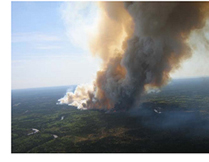 How smoke conditions may affect your health is determined by a number of factors, such as the length of time you are exposed, how much air you breathe in, your health status and the concentration of smoke in the air.
Smoke is made up of a number of components. The unhealthiest material in wildland fire smoke is the small particles (particulates). They may make it harder to breathe or make you cough. These small particles can also make existing heart and lung conditions worse.
Who is most at risk from exposure to smoke?
Young children, the elderly, and people with heart or lung conditions, like asthma, chronic bronchitis, emphysema, and congestive heart failure are more sensitive to the adverse effects of exposure to smoke. People participating in sports or strenuous work outdoors may also be more susceptible, because they are breathing air deeply and rapidly. Risks increase when smoke becomes heavier and as the length of time a person is exposed increases.
What are the symptoms of smoke exposure?
Exposure to smoke can cause sore eyes, tears, cough and a runny nose. If the smoke lasts days to weeks or is very heavy, it can cause lung problems and a longer-lasting cough. Exposure to smoke can also make heart and lung conditions worse.
What should I do if I’m concerned about smoke?
Manitobans who are concerned about smoke can take the following precautions:
- Limit outdoor activities, especially if it makes you tired or short of breath.
- Stay inside and keep windows and doors closed. If you have an air conditioner set it to “re-circulate” and keep it running to help filter the air and keep you cool. If you do not have air conditioning, if possible, try spending some time in an air conditioned place (such as a mall or library) to cool off.
- Keep a close watch on at risk individuals, particularly those that live alone. Young children, elderly people and individuals with chronic conditions may be more sensitive to heat or smoke. For more information on heat, please see Heat and Your Health.
- If you are in your car or truck, keep the windows closed and put the air system on “re-circulate.”
- Limit any strenuous indoor activities if you have been exposed to smoke.
- Avoid cigarette smoke.
- If you have room air cleaners with HEPA filters turn them on.
- Don’t burn anything, including wood stoves, gas stoves and even candles.
- Check local weather forecasts and the Natural Resources and Northern Development – Wildfire Service website for information on fire conditions in your area.
- If you live in the Brandon or Winnipeg area, check the local Air Quality Health Index, for updates on air quality conditions.
People with heart or lung conditions, including asthma, can also do the following:
- Be especially careful about monitoring your condition. Take all of the medication you are supposed to take and do everything your health care provider has recommended for your condition. Make sure you have a week’s supply of medication available.
- Have a written asthma management plan if you or a family member has asthma.
- Talk to your primary health care provider if you have any concerns about your health.
When should I start taking precautions?
Smoke levels from forest fires may vary considerably due to fire conditions and wind directions.
People who are at higher risk such as young children, the elderly and people with heart or lung conditions should consider taking precautions when smoke conditions are light to moderate. This is usually indicated by a smoke odour and haziness or visibility that is less than eight km.
People who are considered healthy should consider taking precautions when smoke conditions are heavy. Heavy smoke conditions exist when visibility is less than about four kilometres, and is especially of concern when these conditions last for a day or more.
When should I seek medical care?
The decision to seek medical care will be affected by factors such as age, existing health problems or the symptoms a person is experiencing at the time. It is important to listen to your body’s cues, especially if you have a condition that puts you at higher risk.
If you or someone you know experiences any of the following symptoms it is important to seek medical care as soon as possible:
- A cough that is persistent or worsening;
- Shortness of breath, beyond what is usually experienced;
- Chest pain or tightness; or
- Significant weakness or fatigue.
If you have questions or are concerned that you may need care, contact your health care provider or call Health Links-Info-Santé at 204-788-8200 or toll free at 1-888-315-9257.
Where can I get more information?
For more information talk to your health care provider, call Health Links – Info Santé at 204-788-8200 or toll free at 1-888-315-9257, or visit:
- Smoke Exposure from Wildland Fires: Interim Guidelines for Protecting Community Health and Wellbeing

- Air Quality Monitoring – Manitoba Environment, Climate and Parks
- Air Quality Health Index – Government of Canada
- Air Quality – Government of Canada
Public Health | Environmental Health |